Our Location
St. 2, Seminarska Str.,
Ostroh, Rivne Region,
Ukraine, 35800
St. 2, Seminarska Str.,
Ostroh, Rivne Region,
Ukraine, 35800

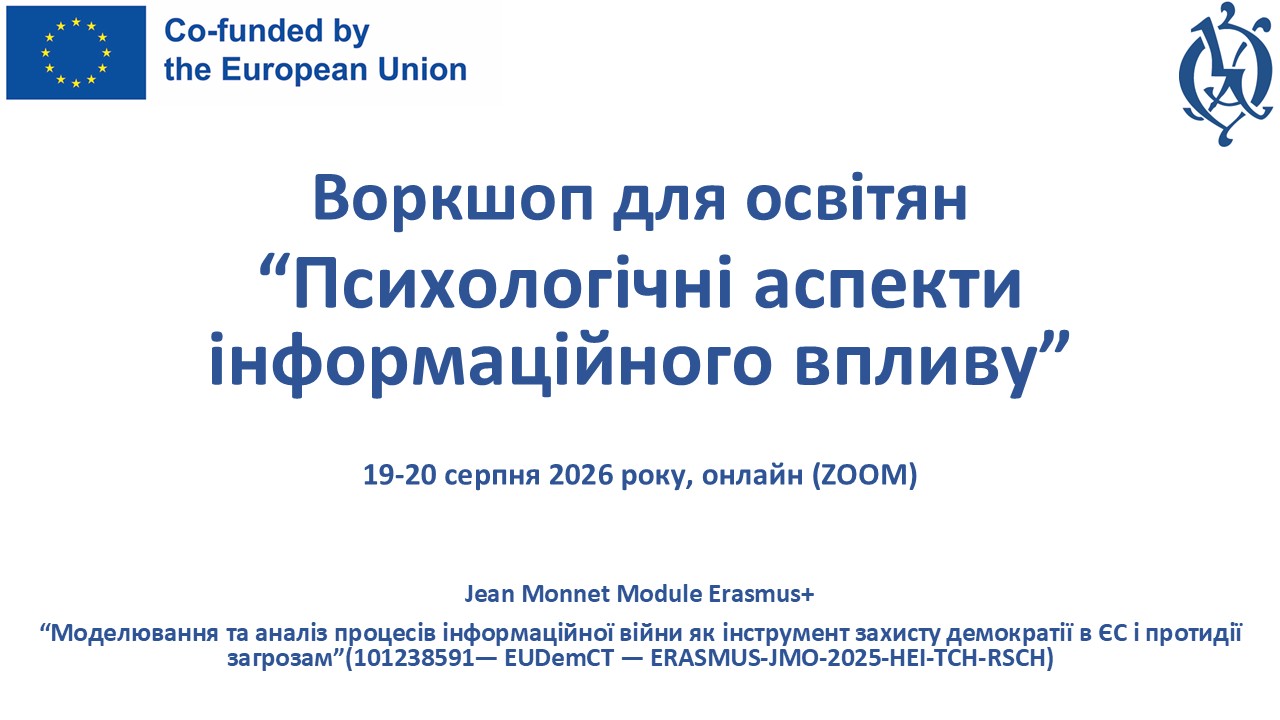
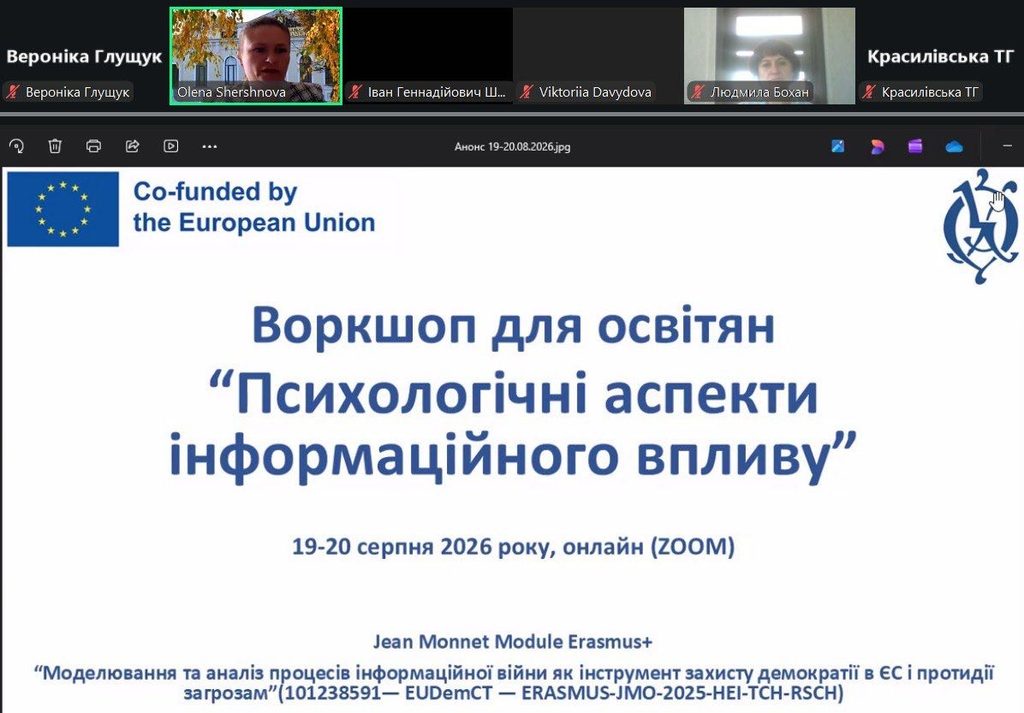
On 19–20 August, the National University of Ostroh Academy hosted a free online workshop for educators entitled ‘Psychological Aspects of Information Influence’. The event brought together educators interested in deepening their understanding of the mechanisms of informational and psycho-informational influence, modern techniques for manipulating information, as well as tools for developing critical thinking, media literacy and psychological resilience.
The workshop lasted two days and comprised 15 hours of training (0.5 ECTS). Its programme was structured around a progression from a theoretical understanding of information influence to the analysis of practical case studies and the development of skills to counter manipulative techniques.
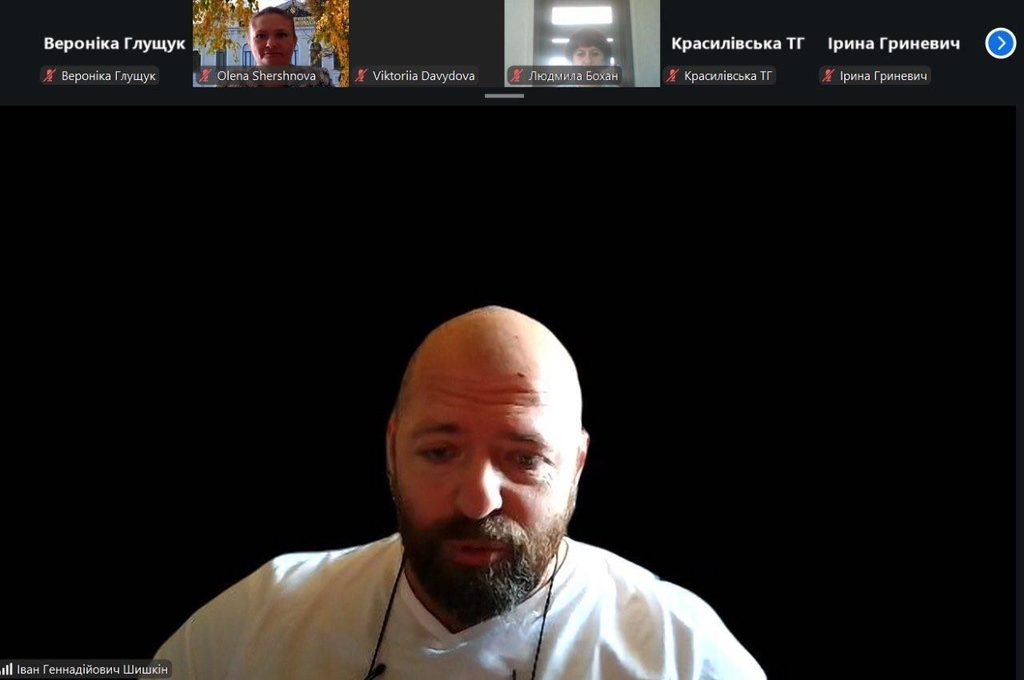
The main training programme of the workshop was delivered by Ivan Shyshkin, PhD in History, Associate Professor at the Department of International Relations, the National University of Ostroh Academy.
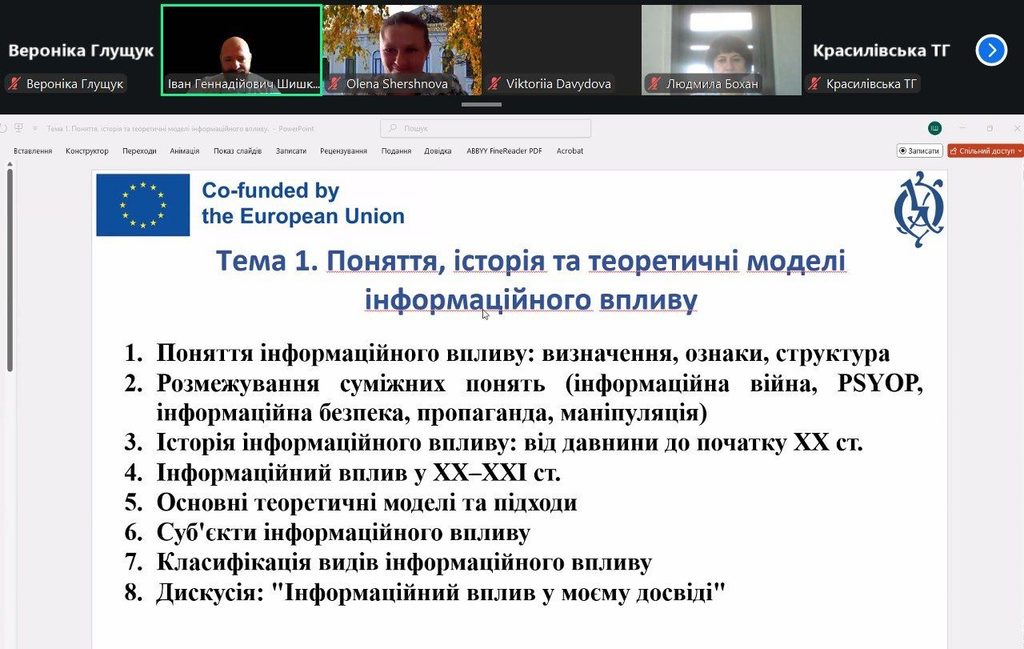
On the first day, participants examined the concepts, history and main theoretical models of information influence, and analysed in detail the psychological mechanisms of information perception and assimilation. Particular attention was paid to cognitive biases, emotional reactions, social context, group dynamics and other factors that may determine a person’s vulnerability to manipulative content.
The second day was as practice-oriented as possible. The educators explored topics relating to the technologies and techniques of information and psychological influence, analysed the mechanisms of propaganda and disinformation, the specific features of information dissemination via social media and algorithmic systems, as well as new challenges associated with the use of artificial intelligence, in particular the creation of deepfakes. The final session was devoted to psychological resilience and practical ways of protecting oneself against information manipulation.
“Today, information influence is not limited to a single message, publication or even an information campaign. People find themselves in a constant information environment where psychological mechanisms of perception, emotions, social media algorithms, group attitudes and new technologies all interact. That is precisely why it was important for us not simply to present participants with a list of manipulative techniques, but to explain why they work and under what conditions people become most vulnerable to them. During the workshop, we moved from theory to specific situations: we analysed propaganda and disinformation tactics, cognitive biases, mechanisms of emotional influence, and the role of the social environment, algorithms and artificial intelligence. For educators, this knowledge is doubly important: it helps to protect their own information environment whilst also providing the tools to foster greater information resilience among pupils and higher education students. Our main task is to learn not to isolate ourselves from information – which is virtually impossible in today’s world – but to engage with it critically, recognise the mechanisms of influence and make informed decisions”,
said Ivan Shyshkin.
Interaction with participants was a key component of the workshop. Following the thematic blocks, there were question-and-answer sessions during which educators had the opportunity to discuss practical situations they encounter in their professional lives and explore ways of integrating the knowledge gained into the teaching process.
“It is of fundamental importance to us that events within the EUDemCT framework do not remain merely an academic discussion about information warfare and disinformation. We aim to create a space in which academic knowledge is transformed into practical skills for those who work with young people on a daily basis, fostering a culture of critical thinking and effectively serving as one of the key pillars of societal resilience. It is educators who can help young people move from passively consuming information to consciously analysing it. This becomes particularly relevant in times of war, when the information space is one of the arenas of conflict, and building resilience to disinformation is directly linked to the protection of democratic values. Therefore, for us, this workshop is not a stand-alone activity, but part of the project’s wider, systematic work, which combines education, research, practical training and the dissemination of knowledge. At the same time, the interest shown by the educators themselves in this topic, their questions and their willingness to apply the tools they have learnt to their own audiences is extremely valuable”,
noted Olena Shershnova, PhD in Public Administration, Associate Professor and Rector’s Assistant for Project Activities at the National University of Ostroh Academy.
The event was held as part of the project “Modelling and Analysis of Information Warfare Processes as a Tool for Defending Democracy in the EU and Countering Threats (101238591 — EUDemCT — ERASMUS -JMO-2025-HEI-TCH-RSCH), which is being implemented by the National University of Ostroh Academy with co-funding from the European Union and aims to address critical gaps in understanding the mechanisms of disinformation, the lack of standardised counter-strategies and low public awareness of information threats. Recognising information warfare as an ever-greater challenge to democratic institutions in Ukraine and the EU, the project brings together education, research and cross-sectoral cooperation with the aim of enhancing resilience to hybrid threats.